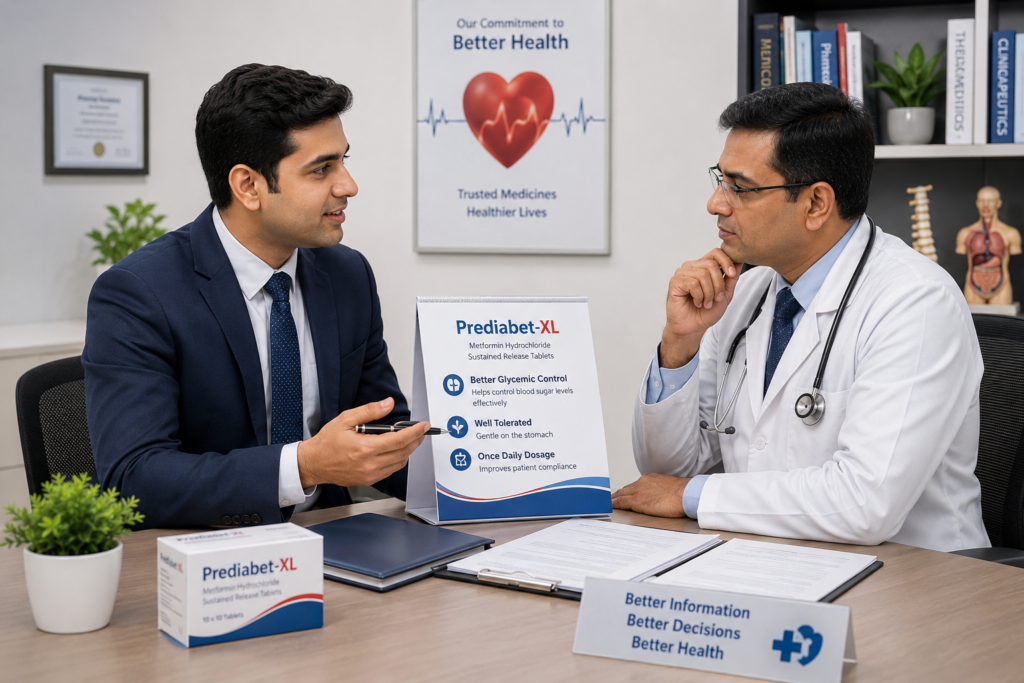
The pharmaceutical and healthcare industry offers a wide range of career opportunities, and one of the most popular roles is that of a Medical Representative (MR). Medical representatives act as an important link between pharmaceutical companies and healthcare professionals. They are responsible for providing doctors, pharmacists, and other healthcare professionals with accurate information about medicines and pharmaceutical products.
While communication skills and confidence are important, professional training can help aspiring candidates develop the industry knowledge and practical skills required for this role. This is where medical representative training programscan play an important role.
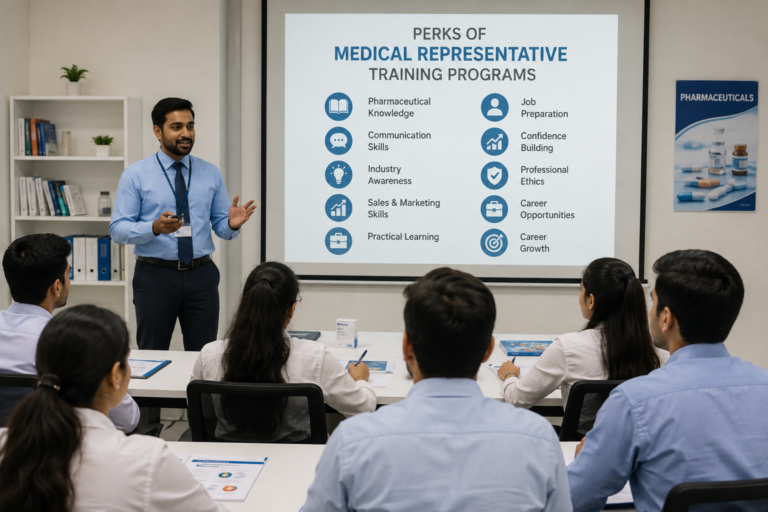
In this blog, we will explore the major perks of medical representative training programs and how they can help individuals build a strong foundation for a career in the pharmaceutical industry.
1. Builds Strong Pharmaceutical Knowledge
One of the biggest advantages of a medical representative training program is the opportunity to gain basic knowledge about the pharmaceutical industry.
Medical representatives may need to understand topics such as:
- Basic human anatomy and physiology
- Common diseases and health conditions
- Different types of medicines
- Pharmaceutical terminology
- Drug classifications
- Dosage forms
- Basic product knowledge
Having a better understanding of these concepts can make it easier for aspiring medical representatives to understand the products they represent and communicate relevant information professionally.
For candidates without a pharmacy or medical background, structured training can provide a useful introduction to the industry.
2. Improves Communication and Presentation Skills
Communication is an essential skill for a medical representative. The role often involves interacting with doctors, pharmacists, healthcare professionals, and other stakeholders.
A medical representative training program may help students develop skills such as:
- Professional communication
- Product presentation
- Active listening
- Confidence building
- Handling questions
- Persuasive communication
- Relationship building
Training sessions, role-playing activities, and presentations can give learners an opportunity to practise communicating in a professional environment.
Better communication skills can also help candidates feel more confident during job interviews and professional interactions.
3. Provides Industry Awareness
The pharmaceutical industry operates differently from many other industries. Medical representatives need to understand how pharmaceutical companies, healthcare professionals, distributors, and retailers are connected.
Training programs can introduce students to important areas such as:
- Structure of the pharmaceutical industry
- Roles and responsibilities of a medical representative
- Doctor and customer interaction
- Pharmaceutical marketing basics
- Sales processes
- Territory management
- Professional ethics and compliance
This industry awareness can help freshers understand what to expect from the job before entering the professional world.
4. Develops Sales and Marketing Skills
A medical representative is often required to combine product knowledge with professional sales and relationship-building skills. Therefore, many training programs focus on the fundamentals of pharmaceutical sales and marketing.
Students may learn about:
- Sales techniques
- Product detailing
- Customer relationship management
- Market analysis
- Identifying customer needs
- Follow-up strategies
- Basic negotiation skills
These skills can be useful not only for a career as a medical representative but also for other roles in pharmaceutical sales, healthcare marketing, and business development.
5. Offers Practical Learning Opportunities
Theoretical knowledge alone may not always prepare a candidate for real-world professional interactions. A major benefit of medical representative training programs is the focus on practical learning.
Depending on the program, learners may participate in activities such as:
- Mock doctor calls
- Role-playing exercises
- Product presentations
- Sales simulations
- Communication practice
- Interview preparation
These activities can help students understand how to apply their knowledge in professional situations.
Practical exposure can also help candidates identify areas where they need further improvement before starting their careers.
6. Helps Freshers Prepare for the Job
For fresh graduates, entering the pharmaceutical industry can sometimes feel challenging, especially without previous experience.
A structured training program can help bridge the gap between academic education and workplace expectations. Students can gain a better understanding of:
- What medical representatives do
- How to communicate professionally
- How to prepare for interviews
- How pharmaceutical sales processes work
- What skills employers may look for
This preparation can help freshers approach job opportunities with greater confidence.
7. Builds Confidence and Professional Personality
Confidence is important in a role that involves regular interaction with professionals and customers. Medical representative training programs often focus on personality development alongside technical and industry knowledge.
Students may improve their:
- Confidence
- Body language
- Speaking ability
- Professional etiquette
- Time management
- Interpersonal skills
Through regular practice and interaction, candidates can become more comfortable presenting information and communicating with different types of people.
8. Introduces Students to Professional Ethics
The healthcare and pharmaceutical sectors require a high level of responsibility and professionalism. Medical representatives should understand the importance of ethical communication and responsible conduct.
Training programs may introduce learners to concepts related to:
- Professional behaviour
- Ethical promotion
- Accurate communication
- Compliance awareness
- Responsible interaction with healthcare professionals
Understanding professional ethics from the beginning can help aspiring medical representatives develop a responsible approach to their careers.
9. Improves Career Opportunities
Completing a relevant training program may help candidates strengthen their knowledge and skills before applying for entry-level opportunities.
Depending on an individual’s qualifications, skills, and employer requirements, career opportunities may include roles such as:
- Medical Representative
- Pharmaceutical Sales Executive
- Healthcare Sales Executive
- Business Development Executive
- Product Support Executive
- Pharma Marketing Associate
Training alone does not guarantee employment, but it can help candidates become better prepared for interviews and entry-level responsibilities.
10. Creates a Foundation for Career Growth
A career as a medical representative can also provide exposure to sales, marketing, healthcare products, and customer relationship management.
With experience and additional skills, professionals may explore opportunities in areas such as:
- Pharmaceutical sales management
- Healthcare marketing
- Product management
- Business development
- Training and development
- Key account management
A strong foundation through training can help individuals understand the industry and plan their future career path more effectively.
Who Can Benefit from Medical Representative Training?
Medical representative training programs can be beneficial for:
- Fresh graduates exploring pharmaceutical careers
- Students interested in healthcare and pharmaceutical sales
- Individuals looking to develop professional communication skills
- Candidates planning to enter entry-level pharma sales roles
- Professionals interested in improving their industry knowledge
However, eligibility requirements can vary depending on the training institute and employer. Candidates should always check the specific qualifications required for a particular course or job role.
A medical representative training program can offer several benefits for individuals interested in building a career in pharmaceutical and healthcare sales. From pharmaceutical knowledge and communication skills to practical learning and industry awareness, structured training can help candidates prepare for professional responsibilities.
The role of a medical representative requires a combination of product understanding, communication ability, professionalism, and relationship-building skills. A good training program can help aspiring professionals develop these essential skills and gain a clearer understanding of the pharmaceutical industry.
For freshers and career aspirants, medical representative training can serve as a useful stepping stone towards exploring opportunities in pharmaceutical sales and healthcare-related fields. The key is to choose a program that offers relevant learning, practical exposure, and up-to-date industry knowledge.
Ultimately, the right training can help aspiring medical representatives move from being job seekers to becoming more confident, knowledgeable, and professionally prepared candidates.