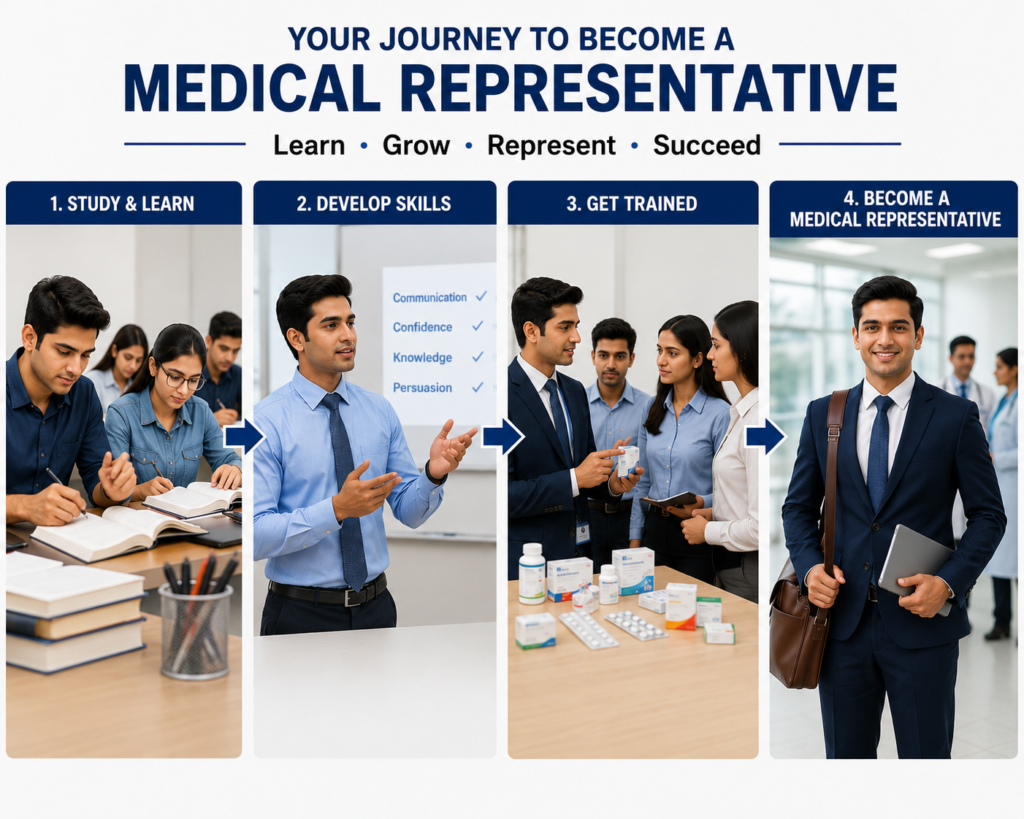
The pharmaceutical industry is one of the fastest-growing sectors in the world, playing a crucial role in improving healthcare and enhancing the quality of life. As new medicines, therapies, and healthcare solutions continue to emerge, pharmaceutical companies rely on skilled professionals to communicate this information effectively to doctors and healthcare providers. One such professional is a medical representative.
If you’ve ever wondered how to become a medical representative, you’re not alone. Many students and fresh graduates are exploring this career because it offers a combination of professional growth, continuous learning, field experience, and opportunities to work in the healthcare sector without becoming a doctor or pharmacist.
A medical representative acts as a bridge between pharmaceutical companies and healthcare professionals. They introduce new medicines, explain product benefits, provide scientific information, and build long-term professional relationships with doctors, hospitals, and pharmacies. Their role goes beyond sales—they help ensure healthcare professionals stay informed about pharmaceutical advancements.
However, becoming a successful medical representative requires more than simply applying for a job. Understanding how to become a medical representative involves learning about educational qualifications, industry knowledge, communication skills, professional ethics, and career development.
Whether you have recently completed your graduation or are planning a career change, this guide will walk you through everything you need to know. From understanding the role to developing the right skills, you’ll gain a clear picture of what it takes to build a successful career in pharmaceutical sales.
Who Is a Medical Representative?
Before learning how to become a medical representative, it’s important to understand what the role actually involves.
A medical representative (MR) is a professional who represents pharmaceutical companies by promoting medicines and healthcare products to doctors, hospitals, clinics, and pharmacies. Their primary objective is to educate healthcare professionals about pharmaceutical products using accurate and scientific information.
Unlike traditional sales roles, medical representatives work in a highly regulated industry where professionalism, product knowledge, and ethical communication are essential.
Some of their key responsibilities include:
- Visiting doctors and healthcare professionals regularly
- Introducing new pharmaceutical products
- Explaining the benefits and usage of medicines
- Sharing clinical and scientific information
- Answering product-related questions
- Building long-term professional relationships
- Collecting market feedback
- Preparing daily reports and maintaining records
Medical representatives serve as an important link between pharmaceutical companies and the medical community, helping healthcare professionals stay informed about the latest developments in medicine.
Understanding these responsibilities is one of the first steps in learning how to become a medical representative.
Why Choose a Career as a Medical Representative?
Many graduates consider pharmaceutical sales because it offers diverse opportunities for professional and personal growth.
Here are some reasons why this career attracts aspiring professionals.
A Growing Industry
The healthcare and pharmaceutical sectors continue to expand due to increasing healthcare awareness, medical innovation, and population growth.
As pharmaceutical companies introduce new products, the need for qualified medical representatives also increases.
This makes learning how to become a medical representative particularly relevant for graduates seeking stable career opportunities.
Continuous Learning
Healthcare is constantly evolving.
New medicines, treatment guidelines, and medical research are introduced every year.
Medical representatives continuously update their knowledge through training sessions, workshops, and product launches.
For individuals who enjoy learning throughout their careers, this profession offers ongoing development.
Opportunities for Career Growth
Many professionals begin as medical representatives and gradually progress to senior positions such as:
- Senior Medical Representative
- Area Business Executive
- Area Sales Manager
- Regional Sales Manager
- Product Manager
- Marketing Manager
- Training Manager
Career advancement depends on performance, communication skills, leadership, and industry knowledge.
Dynamic Work Environment
Unlike desk-based jobs, medical representatives spend much of their time meeting healthcare professionals, visiting hospitals, travelling within assigned territories, and interacting with different people every day.
This makes the profession suitable for individuals who enjoy fieldwork and relationship building.
Step 1: Understand the Role of a Medical Representative
One of the most important steps in understanding how to become a medical representative is knowing what employers expect from the role.
Medical representatives are responsible for much more than product promotion.
Their work includes:
Product Education
They explain pharmaceutical products using scientific information rather than promotional language.
Healthcare professionals expect accurate and reliable product knowledge.
Relationship Building
Trust plays a significant role in pharmaceutical sales.
Medical representatives build long-term relationships through professionalism, consistency, and ethical communication.
Market Awareness
Representatives observe market trends, competitor activities, customer feedback, and healthcare developments.
This information helps pharmaceutical companies improve products and marketing strategies.
Territory Management
Every representative is responsible for managing a specific geographical area.
Planning daily visits, scheduling appointments, and maintaining customer relationships require excellent organisational skills.
Understanding these responsibilities gives aspiring candidates a realistic view of how to become a medical representative and succeed in the profession.
Step 2: Meet the Educational Requirements
A common question among aspiring professionals is:
What qualifications are required to become a medical representative?
Although requirements vary among companies, most employers prefer candidates with a bachelor’s degree from a recognised university.
Relevant educational backgrounds include:
- Bachelor of Pharmacy (B.Pharm)
- Life Sciences
- Biotechnology
- Microbiology
- Biochemistry
- Chemistry
- Zoology
- Botany
- Nursing
- Allied Health Sciences
- Business Administration
- Other graduate degrees with strong communication skills
While science graduates may have an advantage because of their healthcare knowledge, many pharmaceutical companies also recruit graduates from other disciplines who demonstrate strong communication skills and a willingness to learn.
This means that understanding how to become a medical representative involves focusing on both education and professional development.
Step 3: Develop the Essential Skills
Education provides the foundation, but practical skills determine long-term success.
When exploring how to become a medical representative, developing these essential skills is equally important.
Communication Skills
Medical representatives interact with doctors, pharmacists, hospital administrators, and healthcare professionals every day.
The ability to explain medical information clearly and professionally is one of the most valuable skills in this career.
Confidence
Representatives often meet experienced healthcare professionals.
Confidence helps them present information effectively while maintaining professionalism.
Listening Skills
Successful communication involves listening as much as speaking.
Understanding doctors’ questions and feedback helps representatives provide relevant information and build stronger professional relationships.
Time Management
Managing appointments, travel schedules, reporting tasks, and follow-up visits requires excellent organisational skills.
Representatives who manage their time effectively tend to achieve better results.
Product Knowledge
Doctors expect representatives to answer questions accurately.
Developing a strong understanding of medicines, healthcare terminology, and pharmaceutical products builds credibility and trust.
Professional Ethics
Ethical communication is fundamental to pharmaceutical sales.
Medical representatives must always provide accurate information, follow industry guidelines, and represent their organisation responsibly.
Is This Career Right for You?
Before deciding how to become a medical representative, it is helpful to consider whether the profession matches your interests and strengths.
This career may be a good fit if you:
- Enjoy meeting and communicating with new people
- Are interested in healthcare and medicine
- Like learning about new products and scientific developments
- Feel comfortable travelling for work
- Can manage your time effectively
- Want opportunities for career growth
- Enjoy working in a dynamic, field-based environment
While the profession can be rewarding, it also requires dedication, continuous learning, and the ability to build lasting professional relationships.
Choosing this career should be based on your interests, strengths, and long-term career goals rather than salary alone.
Step 4: Gain Industry Knowledge
If you’re serious about learning how to become a medical representative, developing industry knowledge is just as important as earning a degree. Pharmaceutical companies look for candidates who understand the basics of healthcare, medicines, and the pharmaceutical market.
You don’t need to be a doctor, but having a solid understanding of the healthcare industry can help you communicate more confidently with medical professionals.
Areas you should become familiar with include:
- Basic human anatomy and physiology
- Medical terminology
- Common diseases and treatments
- Drug classifications
- Pharmaceutical manufacturing
- Healthcare regulations
- Ethical marketing practices
The more knowledge you have, the easier it becomes to explain products accurately and answer doctors’ questions with confidence.
Learning these concepts is an important part of how to become a medical representative, especially for graduates from non-science backgrounds.
Step 5: Consider a Medical Representative Course
Although a degree may help you meet the basic eligibility requirements, many candidates also choose to complete a medical representative course to strengthen their industry knowledge and practical skills.
A structured training programme can help you understand:
- Pharmaceutical sales techniques
- Product detailing
- Doctor call planning
- Customer relationship management
- Communication and presentation skills
- Medical terminology
- Sales reporting
- Professional ethics
Completing a course is not always mandatory, but it can improve your confidence and prepare you for interviews and workplace responsibilities.
If you’re researching how to become a medical representative, professional training is one way to bridge the gap between academic knowledge and industry expectations.
Build Strong Communication Skills
One of the biggest factors that determines success in pharmaceutical sales is communication.
Medical representatives meet healthcare professionals every day, making effective communication one of the most valuable career skills.
Good communication involves:
- Explaining product information clearly
- Listening actively
- Speaking confidently
- Maintaining professionalism
- Adapting communication to different audiences
Doctors often have limited time, so representatives must communicate important information quickly and accurately.
Anyone learning how to become a medical representative should invest time in improving verbal communication, presentation abilities, and interpersonal skills.
Improve Your Product Knowledge
Healthcare professionals expect medical representatives to have detailed knowledge about the products they promote.
This includes understanding:
- Product composition
- Therapeutic benefits
- Recommended usage
- Safety precautions
- Storage requirements
- Possible side effects
- Scientific studies supporting the product
Rather than memorising sales scripts, successful representatives focus on understanding the science behind their products.
Strong product knowledge builds trust and credibility.
Develop Relationship-Building Skills
Pharmaceutical sales is built on professional relationships.
Doctors appreciate representatives who are knowledgeable, respectful, and reliable.
Building long-term relationships requires:
- Consistency
- Honesty
- Professional behaviour
- Respect for doctors’ schedules
- Regular follow-up
- Providing accurate information
Understanding how to become a medical representative also means understanding that trust is earned over time.
Representatives who focus on long-term relationships often perform better than those who focus only on short-term sales targets.
Learn Time Management
Medical representatives usually manage multiple hospitals, clinics, pharmacies, and healthcare professionals across a specific territory.
A typical day may include:
- Planning doctor visits
- Travelling between locations
- Preparing presentations
- Updating reports
- Following up with customers
- Attending internal meetings
Good time management helps representatives stay organised and productive.
Learning to prioritise tasks is an essential step in how to become a medical representative.
Day-to-Day Responsibilities of a Medical Representative
Understanding daily responsibilities gives you a realistic picture of the profession.
A medical representative typically spends the day:
Visiting Doctors
Meeting healthcare professionals to introduce products and discuss medical information.
Presenting Pharmaceutical Products
Explaining medicine benefits using scientific evidence and approved product literature.
Answering Questions
Responding to queries related to product usage, safety, and clinical information.
Collecting Market Feedback
Understanding doctors’ opinions, patient needs, and competitor activities.
Managing Reports
Updating daily call reports, customer interactions, and business performance using digital reporting systems.
Participating in Training
Learning about new product launches and industry developments through company training programmes.
Every responsibility contributes to becoming a trusted healthcare communication professional.
Career Growth Opportunities
Many graduates choose pharmaceutical sales because of its structured career progression.
Once you understand how to become a medical representative, you’ll discover there are several opportunities for advancement.
A common career path includes:
- Medical Representative
- Senior Medical Representative
- Area Business Executive
- Area Sales Manager
- Regional Sales Manager
- Zonal Sales Manager
- National Sales Manager
- Product Executive
- Product Manager
- Marketing Manager
- Corporate Trainer
Career growth depends on:
- Communication skills
- Product knowledge
- Performance
- Leadership abilities
- Continuous learning
- Customer relationship management
Many professionals eventually move into marketing, training, product management, or business development roles.
Salary Factors
One of the most frequently asked questions is:
How much does a medical representative earn?
There is no fixed answer because earnings depend on several factors.
These include:
- Educational background
- Experience
- Employer
- Territory
- Product portfolio
- Communication skills
- Sales performance
Many companies offer:
- Fixed monthly salary
- Performance incentives
- Travel allowance
- Mobile reimbursement
- Medical insurance
- Annual bonuses
- Professional development programmes
Instead of focusing only on the starting salary, candidates should consider the long-term growth opportunities available in the pharmaceutical industry.
Challenges You Should Be Prepared For
Every profession comes with challenges, and pharmaceutical sales is no exception.
Understanding these challenges is an important part of learning how to become a medical representative.
Managing Busy Doctor Schedules
Doctors often have limited availability.
Representatives must remain flexible while respecting appointment timings.
Travelling Frequently
The job involves regular travel between hospitals, clinics, and pharmacies.
Candidates who enjoy fieldwork generally adapt well.
Continuous Learning
Healthcare evolves rapidly.
Representatives must regularly update themselves about:
- New medicines
- Medical research
- Treatment guidelines
- Industry regulations
Meeting Business Goals
Most pharmaceutical companies set performance expectations.
Successful representatives balance business objectives with ethical communication and relationship building.
Practical Tips for Success
If you’re planning how to become a medical representative, these practical tips can help you build a successful career.
Keep Learning
Read healthcare articles, pharmaceutical news, and product updates regularly.
Knowledge improves confidence.
Improve Communication Daily
Practice speaking clearly, confidently, and professionally.
Strong communication often creates better career opportunities.
Build Professional Networks
Connect with healthcare professionals and industry experts.
Networking helps you learn from experienced professionals.
Stay Ethical
Healthcare is built on trust.
Always provide accurate information and follow professional guidelines.
Develop Digital Skills
Modern pharmaceutical companies increasingly use:
- CRM software
- Digital reporting
- Virtual meetings
- Online product presentations
Representatives comfortable with technology are often more productive.
Industry Trends Shaping the Future
The pharmaceutical industry continues to embrace innovation.
Some important trends include:
Digital Healthcare
Virtual consultations and digital communication are becoming more common, changing how medical representatives interact with healthcare professionals.
Data-Driven Sales
Companies increasingly use analytics to understand customer needs and improve decision-making.
Patient-Centric Healthcare
Modern pharmaceutical companies focus on improving patient outcomes alongside business growth.
Representatives who understand this approach communicate more effectively with healthcare professionals.
Lifelong Professional Development
Learning doesn’t stop after getting hired.
Professionals who continuously upgrade their knowledge remain competitive throughout their careers.
As the pharmaceutical industry evolves, understanding how to become a medical representative also means staying adaptable, embracing new technologies, and committing to continuous improvement.
The Future of Medical Representatives
The pharmaceutical industry is changing rapidly. Advances in healthcare, biotechnology, digital tools, and patient care are reshaping how pharmaceutical companies interact with healthcare professionals. While technology has transformed many business processes, the role of a medical representative continues to remain relevant and valuable.
Today’s medical representatives are expected to do much more than introduce medicines. They are healthcare communicators who educate doctors about new pharmaceutical products, explain scientific information, and help strengthen professional relationships between healthcare providers and pharmaceutical companies.
If you are exploring how to become a medical representative, it’s important to understand that the future of this profession belongs to individuals who are adaptable, knowledgeable, and committed to continuous learning.
Digital technologies such as Customer Relationship Management (CRM) software, virtual doctor meetings, online product presentations, and data analytics are becoming common in the pharmaceutical industry. As a result, professionals who combine industry knowledge with digital skills are likely to have better career opportunities.
Learning how to become a medical representative today means preparing for both traditional fieldwork and modern digital communication.
Why Continuous Learning Is Essential
One of the biggest advantages of working in the pharmaceutical industry is that learning never stops.
New medicines, treatment guidelines, healthcare technologies, and medical research are introduced every year.
Medical representatives are expected to stay updated about:
- New pharmaceutical products
- Clinical studies
- Drug safety updates
- Healthcare regulations
- Industry trends
- Medical technologies
This continuous learning helps representatives communicate confidently with doctors and healthcare professionals.
If you’re wondering how to become a medical representative who succeeds in the long run, developing the habit of continuous learning is one of the most important steps.
Professional development not only improves product knowledge but also opens opportunities for promotions and leadership roles.
Common Mistakes to Avoid
Many beginners make avoidable mistakes when starting their pharmaceutical sales careers.
If you’re learning how to become a medical representative, try to avoid these common errors:
Focusing Only on Sales
The primary responsibility of a medical representative is to educate healthcare professionals with accurate and ethical product information. Building trust should always come before achieving sales targets.
Ignoring Product Knowledge
Doctors often ask technical questions about medicines and treatments.
Without proper product knowledge, representatives may struggle to communicate effectively.
Continuous learning is essential.
Poor Time Management
Medical representatives usually handle multiple doctor visits every day.
Poor planning can reduce productivity and affect professional relationships.
Weak Communication Skills
Even with excellent qualifications, poor communication can limit career growth.
Practising presentations, active listening, and professional conversations helps improve confidence.
Not Building Relationships
Successful pharmaceutical sales depend on long-term relationships.
Representatives who focus on trust, professionalism, and consistency often build stronger careers.
How to Prepare for a Medical Representative Interview
Once you understand how to become a medical representative, the next step is preparing for interviews.
Employers generally assess both your knowledge and your communication abilities.
Some common interview topics include:
- Tell us about yourself.
- Why do you want to become a medical representative?
- What do you know about our company?
- How would you explain a pharmaceutical product to a doctor?
- How do you handle rejection?
- What are your strengths?
- How do you manage your daily schedule?
- Why should we hire you?
Interview preparation should include:
- Researching the pharmaceutical company
- Improving communication skills
- Learning basic medical terminology
- Understanding pharmaceutical products
- Practising confidence and professionalism
Preparing well significantly improves your chances of securing your first opportunity.
Key Takeaways
Before starting your pharmaceutical sales career, remember these important points:
- Learning how to become a medical representative involves more than meeting educational requirements.
- Strong communication and interpersonal skills are just as important as academic qualifications.
- A bachelor’s degree is commonly preferred, while additional professional training can improve employability.
- Continuous learning helps professionals stay updated with new medicines and healthcare developments.
- Product knowledge builds credibility with healthcare professionals.
- Time management and relationship-building skills contribute to long-term success.
- The pharmaceutical industry offers excellent opportunities for career growth and leadership.
- Ethical communication and professionalism remain essential throughout your career.
Frequently Asked Questions (FAQs)
1. How do I become a medical representative?
To understand how to become a medical representative, start by completing a bachelor’s degree, improving your communication skills, learning about the pharmaceutical industry, and considering a medical representative course to gain practical knowledge.
2. What qualifications are required to become a medical representative?
Most pharmaceutical companies prefer candidates with a recognised bachelor’s degree. Many employers also value strong communication skills, industry knowledge, and professional behaviour.
3. Can graduates from any stream become medical representatives?
Yes. Although graduates from pharmacy, life sciences, biotechnology, nursing, and allied healthcare fields may have an advantage, graduates from other disciplines can also build successful careers by developing relevant skills and industry knowledge.
4. Is a medical representative course necessary?
A medical representative course is not always mandatory, but it can strengthen your understanding of pharmaceutical sales, medical terminology, product detailing, and professional communication.
5. What skills are most important for a medical representative?
Some essential skills include:
- Communication
- Product knowledge
- Time management
- Relationship building
- Presentation skills
- Confidence
- Active listening
- Professional ethics
6. Is travelling required in this profession?
Yes. Medical representatives regularly travel within assigned territories to visit doctors, hospitals, clinics, and pharmacies.
7. What career opportunities are available after becoming a medical representative?
Professionals can progress to roles such as Senior Medical Representative, Area Sales Manager, Regional Sales Manager, Product Manager, Marketing Manager, Training Manager, and Business Development Manager.
8. Is pharmaceutical sales a good career?
Yes. Pharmaceutical sales offers continuous learning, career advancement, competitive compensation, and opportunities to work closely with healthcare professionals.
9. How long does it take to become a medical representative?
The timeline depends on your educational background and training. After completing a bachelor’s degree, candidates can apply for entry-level positions or pursue additional training to improve job readiness.
10. Why is learning how to become a medical representative important?
Understanding how to become a medical representative helps you prepare the right qualifications, develop industry-relevant skills, and build a strong foundation for a successful pharmaceutical sales career.
Choosing a career in pharmaceutical sales can be both professionally rewarding and personally fulfilling. If you have been researching how to become a medical representative, the first step is to understand that success requires a combination of education, communication skills, product knowledge, and a willingness to learn continuously.
The healthcare industry is constantly evolving, creating new opportunities for skilled professionals who can effectively communicate scientific information and build meaningful relationships with healthcare providers. By understanding how to become a medical representative, developing the right skills, and staying updated with industry trends, you can build a stable and rewarding career with long-term growth potential.
Whether you are a recent graduate, a career changer, or someone interested in the pharmaceutical industry, investing in your professional development today can open the door to exciting opportunities tomorrow.